
 CONFERENCE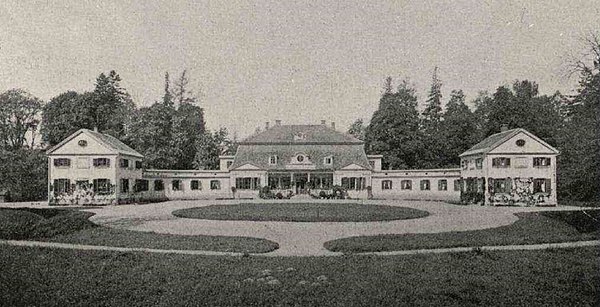

“Ratnieki” was first mentioned in Vidzeme records in 1601, when the land belonging to Sigulda Castle Manor was divided into peasant farms. In 1755, the Nurmuiža Manor came into the possession of Baron Georg von Dunten. A peasant named Pēteris Lauberts earned special favor from the count’s son for installing a floor in his apartments that was so smooth the count would slide gold and silver thalers across it, saying: “Take it, Peter!” Thus, in 1874, Pēteris Lauberts purchased “Ratnieki,” an estate covering approximately 117 hectares, for 5,850 rubles, or 39,5 thalers.
In 1900, a sawmill was established here, producing lumber and wooden roof shingles. After the master craftsman lost his hand in an accident, a cooperative dairy was set up between 1904 and 1908, and a threshing machine was purchased.
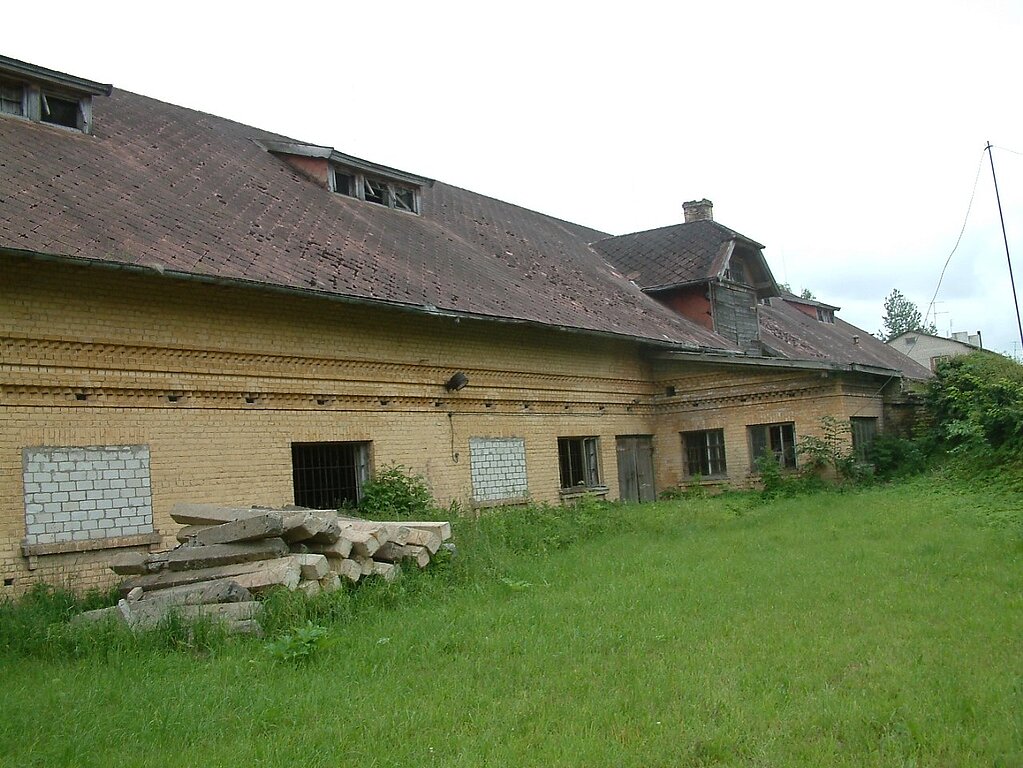
In 1932, “Ratnieki” was purchased for 55 000 lats by Roberts Hiršs, the founder of the Rīgas Audums textile factory. His vision was not only to create a profitable estate but also to establish a pleasant retreat where his factory workers could spend their holidays affordably and meaningfully — enriching their education and life experience through various training courses and seminars. Between 1932 and 1936, several new buildings were constructed: a residential building (Kungu māja / Manor House), an administration building (Baltā māja / White House), a modern stable and a coach house, while the granaries (large and small) and the barn were renovated. High-quality materials and the most advanced Western European building methods of the time were used in construction. The interiors were tastefully designed, with oak wall panels and parquet floors, combining functionality and artistry. In the landscape design, gardeners incorporated traditional Latvian countryside elements, expanding the orchard and arranging shrubs and flowers in harmonious compositions. Simplicity remained the guiding aesthetic. The courtyard featured a lawn with three grafted lilac bushes (pink, blue, and white), and on the slope stood a tiled swimming pool connected by a path to a tennis court. The farm roads were paved with tiles, while the ravines with ancient oaks added a natural charm and sense of timelessness. The main building was approached through an avenue of “trees of life.” The estate was notable for its modern facilities: a tiled, clean, and well-ventilated barn, a small, cozy sauna with a smokehouse above it, and all utility buildings equipped with indoor plumbing, central heating, and electricity — quite advanced for that era.
In 1939, Roberts Hiršs, together with his wife and three sons, emigrated to the United States. A year later, in 1940, as the war began, a livestock farming school was established at “Ratnieki", which operated from 1941 to 1944. In 1944, the Vildoga Primary School was relocated to Ratnieki, and from 1944 to 1947, the site became home to a Horticulture and Home Economics School. By 1947, “Ratnieki” was taken over by the Bulduri Horticultural Technical School as a subsidiary farm, where students could gain practical experience. The estate expanded significantly in 1952, reaching an area of 692 hectares, with the establishment of a tree nursery, apiary, and greenhouses. In 1956, “Ratnieki” became a subsidiary of the Hippodrome farm, and in 1962, it was renamed the Scientific Research Farm “Līgatne.” Over time, “Ratnieki” developed into a small residential settlement, featuring three-story apartment buildings, a kindergarten, a community club, and garages with mechanical workshops — marking its transformation from a private estate into an active educational and agricultural center.
In 1972, Roberts Hiršs bequeathed his countryside property “Ratnieki” to the University of Latvia, which officially received ownership in 2002. In 1999, the University of Latvia Foundation took over the management of “Ratnieki” and began restoring and improving the 136,2 hectare estate. By 2004, an extensive business development plan was launched with the vision of transforming “Ratnieki” into a modern recreation, sports and conference complex, continuing its long tradition of education, community and innovation in the heart of Vidzeme.
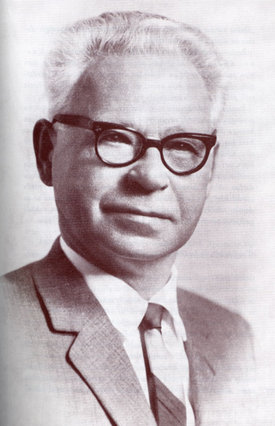
Roberts Hiršs (1895 - 1972)
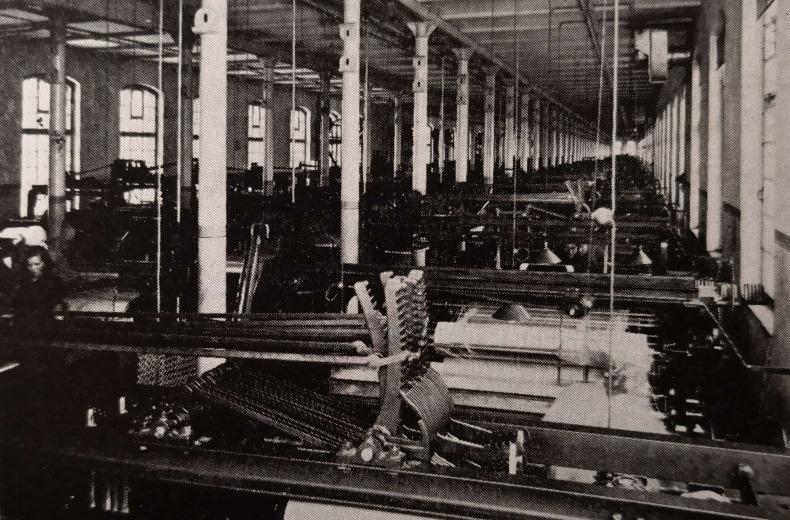
Roberts Hiršs (1895–1972), the owner and director of the textile company “Rīgas Audums”, rose from a humble apprentice to a talented and internationally recognized industrialist — a man of refined taste in both nature and work, widely regarded as a symbol of humanity and integrity in his treatment of employees. He was the first industrialist in Latvia to introduce the production of silk and artificial silk fabrics. In 1925, he established a small workshop that later grew into the joint-stock company “Rīgas Audums.” Hiršs succeeded in developing his enterprise independently, without binding himself to state financial “chains,” thereby avoiding dictatorial control and regulation. Perhaps for this reason, in 1939 he emigrated to the United States, where he continued to work in the textile industry.
In 1971, Roberts Hiršs bequeathed his properties in Latvia to the University of Latvia in his will - including the land and buildings of the textile factory “Rīgas Audums” and the farmstead “Ratnieki” in Līgatne Parish, together with its adjoining land and structures.
“Ratnieki”, the rural estate of Roberts Hiršs, was developed in the mid-1930s as one of Latvia’s model farmsteads, featuring the most advanced production methods of the time. It is a place where modern society can connect with the legacy of this patron of science and the arts. By sharing the story of this remarkable individual’s life and fate — closely tied to the birth of Latvia’s First Republic — “Ratnieki” has become a unique and distinctive site for tourism and education. The surrounding environment and its people carry a cultural layer that has been passed down through generations. To forget or destroy it is, in essence, to destroy ourselves as a nation.
Personality, Talent, Inspiration – Roberts Hiršs
Roberts Hiršs was the second most significant patron of the University of Latvia, after Kristaps Morbergs (1844–1928). He bequeathed all his Latvian properties - the textile factory “Rīgas Audums” and the rural estate “Ratnieki” in Līgatne Parish, Cēsis District—to the University of Latvia.
Hiršs was the founder and innovator of Latvia’s artificial and natural silk fabric and product manufacturing sector. He stands as an outstanding example of an entrepreneur in the First Latvian Republic, demonstrating to modern business leaders that through relentless work, integrity, innovative talent, and highly developed strategic and tactical skills, one can become a leading industrialist. Having experienced the hardships of foreign lands, he viewed Latvia as a nation of immense opportunities. Hiršs grounded his success in scientific collaboration, working closely with the faculty of the University of Latvia and leveraging its technical resources for fabric dyeing experiments, water analysis, and scientific research in thermal engineering, ventilation, economics and law.
Roberts Hiršs was the third-largest entrepreneur in Latvia during the interwar period, after Anton Benjamin and shipowner Fricis Grauds, and the largest private taxpayer in the country. He was an entrepreneur of international stature, skillfully leveraging extensive foreign connections. Alongside “Rīgas Audums”, he organized and managed a similar but larger enterprise in Lithuania, “Kauno Audinai”, and shortly before World War II, a company in Norway, “Miron-Aktieseļskap”, followed after the war by “Roberts Hiršs Co.” in the United States. According to economic experts, Hiršs was a successful, visionary entrepreneur and innovator, with extensive experience in textile technology and management. He understood markets and customers, adhered to recognized international business standards and based his enterprise on innovation, implementing all new developments immediately.
He was a person of dynamic temperament, volcanic energy, sharp intellect, extraordinary work capacity, profound intuition, and expertise. By nature, he was an entrepreneur with a deep curiosity about everything. A self-taught autodidact, he mastered and expanded his engineering and mechanical skills through his own initiative, combining natural aptitude with relentless perseverance, thereby forging his path in life and achieving his goals. As a leader, he cultivated close, practical, and considerate relationships with his employees, believing these to be the foundation of successful enterprise.
Roberts Hiršs was a pioneer in creating extensive educational and social programs for employees and organizing their leisure time within his enterprises. A talented observer of people and a practical-minded individual, he understood the value of work in human life. He was both a mentor to his employees and a leader of his teams, running his businesses in ways that served both himself and society. A driven visionary, he rebuilt his economic successes from scratch three times in his lifetime. A man of high culture, he remained deeply engaged with arts and culture despite his busy schedule - attending theaters, museums and cultural events, drawing energy from nature and personally engaging in music and painting during his free moments.
Roberts was a philosopher of national life, seeing its meaning through the lenses of youth, education, art, health, and other spiritual values, all rooted in the heritage of the Latvian spirit. A philanthropist and benefactor in all areas of social life, he approached people with great simplicity, sometimes mischievous like a boy, and was a devoted patriot. He was the only exemplary industrialist of Latvia in his era who genuinely sought to improve the welfare of his employees—providing free vocational education, rationalizing company operations, improving working and living conditions, and elevating cultural standards. Though unintentionally, he left a vast cultural and historical legacy, now awaiting further and deeper study. To the nation, he remains a multi-faceted, complex and subtly vulnerable personality, one we may never fully know.
From the book: "Verners R. Lediņš, Roberts Hiršs (1895–1972), Series "Latvijas Universitātes mecenāti", 2009, 388 pages"
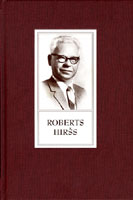
Verners R. Lediņš
Roberts Hiršs (1895–1972)
Series "Latvijas Universitātes mecenāti"
2009
388 pages
ISBN 978-9984-45-120-6
The book is dedicated to the memory of University of Latvia patron Roberts Hiršs. As a skilled industrialist, Hiršs laid the foundations of a large-scale silk textile industry, expanded it, and established a vast and successful approximately 200 hectare rural estate where products were produced for the needs of factory workers. He was also a man of high culture and a great patriot of Latvia. The author, V. R. Lediņš, notes: “The book will serve both as an informative resource and as a guide to what a modern businessperson should be like.”
Publisher: University of Latvia Academic Press